
CEO & Co-founder of Visivo
Stay Aligned with Modern Data Stack for Reliable Data Systems
Learn how aligning your BI tools with the modern data stack creates reliable, unified data systems and trustworthy analytics.
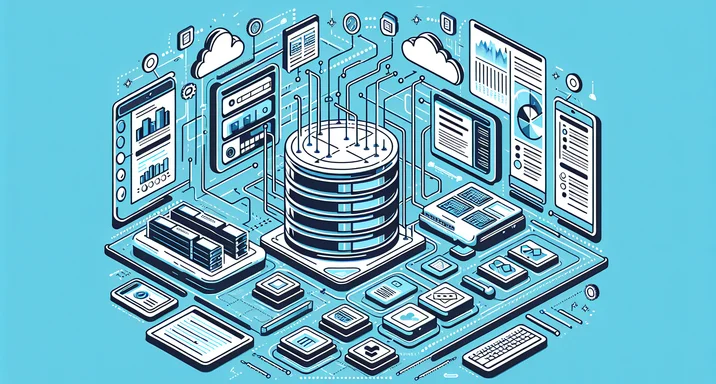
The modern data stack has revolutionized how organizations collect, process, and analyze data. This cloud-native ecosystem of specialized tools working in harmony delivers unprecedented scalability, flexibility, and reliability. According to Grand View Research, the global data analytics market is experiencing significant growth, driven largely by modern data stack adoption.
However, many organizations struggle to align their business intelligence tools with this modern architecture, creating friction that undermines data reliability and analytics effectiveness.
Defining the Modern Data Stack and Its Significance
The modern data stack represents a fundamental shift from monolithic, on-premise data platforms to composable, cloud-native architectures. Unlike traditional approaches where a single vendor provides all capabilities, the modern data stack embraces best-of-breed tools that excel at specific functions.
Core components of the modern data stack include:
Cloud Data Warehouses: Platforms like Snowflake, BigQuery, and Databricks provide scalable, separated compute and storage. They enable organizations to analyze massive datasets without managing infrastructure.
Data Integration Tools: Solutions like Fivetran, Airbyte, and dlt automate data ingestion from hundreds of sources. They handle schema changes, API updates, and connection management automatically.
Transformation Layer: dbt™ (data build tool) has become the standard for data transformation, enabling analysts to use SQL and version control to build reliable data models. Learn more about this in our dbt™ BI integration guide.
Orchestration Platforms: Tools like Apache Airflow and Dagster coordinate complex data workflows, ensuring dependencies are respected and failures are handled gracefully.
Data Quality and Observability: Solutions like Monte Carlo and Great Expectations monitor data quality, alerting teams to anomalies before they impact downstream analytics.
The significance of this architecture lies in its modularity and specialization. Each tool focuses on doing one thing exceptionally well, and standard interfaces enable seamless integration. This approach delivers agility, allowing organizations to swap components as needs evolve without rebuilding entire systems.
# Example: Visivo integrating with modern data stack tools
# project.visivo.yml
name: modern_stack_integration

models:
  # Connect to Snowflake data warehouse
  - name: snowflake_sales
    source:
      type: snowflake
      account: "{{ env_var('SNOWFLAKE_ACCOUNT') }}"
      database: ANALYTICS
      schema: DBT_PROD
    sql: SELECT * FROM fct_sales

  # Connect to DuckDB for local development
  - name: local_dev
    source:
      type: duckdb
      database: local_analytics.db
    sql: SELECT * FROM staging_data
Why BI Tools Must Align with Modern Data Stack Components
Traditional BI tools were designed for a different era—one where data lived in operational databases and ETL meant overnight batch jobs. These tools struggle in modern environments, creating several critical issues:
Data Freshness Gaps: When BI tools don't integrate with modern orchestration, they can't leverage real-time or near-real-time data pipelines. Users end up with stale insights while fresher data sits unused in the warehouse. This problem is addressed in our reliable BI insights for stakeholders guide.
Transformation Duplication: Without alignment to dbt™ and similar tools, BI platforms force analysts to recreate business logic in proprietary languages. This duplication leads to inconsistencies and maintenance nightmares, as discussed in our YAML vs GUI BI configuration comparison.
Governance Breakdown: Modern data stacks implement sophisticated governance through tools like data catalogs and lineage tracking. BI tools that don't integrate with these systems create blind spots in data governance.
Misalignment creates technical debt that compounds over time. Teams waste countless hours reconciling differences between BI calculations and source-of-truth data models. Business users lose trust when different tools show different numbers for the same metric.
This trust issue is critical - data quality issues can have significant financial impact on organizations, often due to inconsistencies between systems.
Strategies to Stay Aligned
Achieving alignment between BI tools and the modern data stack requires deliberate strategy and the right technical choices:
Use Compatible Tools: Choose BI platforms designed for the modern data stack. Tools like Visivo that treat dashboards as code naturally align with engineering-oriented data teams. They speak the same language of Git, YAML, and SQL that powers the rest of the stack, as detailed in our developer-first BI workflows guide.
# Example: Visivo workflow aligned with modern data stack
# 1. Pull latest dbt models
git pull origin main
cd dbt_project && dbt run --target prod

# 2. Update Visivo dashboards to use new models
cd ../visivo_dashboards
visivo test  # Validate against new data
visivo deploy -s production
Adopt Modular Architecture: Structure your BI layer as another modular component rather than a monolithic platform. This means separating data modeling (handled by dbt) from visualization (handled by your BI tool) from orchestration (handled by Airflow). Each component has its specific responsibility and communicates through well-defined interfaces.
# project.visivo.yml
name: analytics_dashboards
local_models_path: models/

# Integrate with dbt models
models:
  - name: dbt_metrics
    source:
      type: duckdb
      database: "{{ env_var('DBT_OUTPUT_PATH', 'target/dev.duckdb') }}"
    sql: |
      SELECT * FROM analytics.fact_sales
      WHERE date >= CURRENT_DATE - INTERVAL 30 DAY

insights:
  - name: sales_trend
    props:
      type: scatter
      mode: lines
      x: ?{ ${ref(dbt_metrics).date} }
      y: ?{ ${ref(dbt_metrics).revenue} }

charts:
  - name: sales_performance
    insights:
      - ${ref(sales_trend)}

dashboards:
  - name: Analytics Dashboard
    rows:
      - height: medium
        items:
          - chart: ${ref(sales_performance)}
Ensure Data Governance: Implement consistent governance across all stack components. This includes:
- Unified Metrics Layer: Define business metrics once in a central location (like dbt metrics) and reference them consistently across all BI tools
- Lineage Tracking: Ensure your BI tool can report its lineage back to data catalogs, showing how dashboards connect to underlying data
- Access Control: Align BI permissions with data warehouse security policies, using service accounts and role-based access
# Example: Centralized metrics definition
# models/metrics.yml (dbt)
metrics:
  - name: monthly_revenue
    label: Monthly Revenue
    model: ref('fct_orders')
    calculation_method: sum
    expression: order_total
    timestamp: order_date
    time_grains: [month]

# project.visivo.yml (Visivo consuming dbt metrics)
models:
  - name: metrics_mart
    source:
      type: "{{ env_var('WAREHOUSE_TYPE') }}"
      database: analytics
    sql: |
      SELECT * FROM dbt_metrics.monthly_revenue
      WHERE metric_date >= '{{ start_date }}'
Embrace DataOps Practices: Apply DevOps principles to your entire data stack, including BI:
- Version control all configurations
- Automate testing and deployment
- Implement monitoring and alerting
- Use infrastructure-as-code for reproducibility
Achieving Reliable, Unified Data Systems
When BI tools properly align with the modern data stack, organizations achieve a level of reliability and unity previously impossible:
Single Source of Truth: With aligned systems, business logic lives in one place—typically dbt models. BI tools consume these pre-validated, pre-tested models rather than recreating logic. This eliminates the "which number is right?" debates that plague many organizations.
# Example: Visivo consuming dbt models directly
# project.visivo.yml
models:
  - name: dbt_marts
    source:
      type: "{{ env_var('WAREHOUSE_TYPE') }}"
      database: "{{ env_var('DBT_DATABASE') }}"
      schema: dbt_prod
    sql: |
      -- Reference pre-built dbt models
      SELECT * FROM marts.core.fct_orders
      WHERE order_date >= '{{ start_date }}'
End-to-End Observability: Modern data stacks with aligned BI tools provide complete visibility from data source to dashboard. When issues arise, teams can trace problems through the entire pipeline:
# tests.visivo.yml
tests:
  - name: data_quality_check
    type: assert
    model:
      sql: |
        SELECT COUNT(*) as null_count
        FROM analytics.fact_sales
        WHERE customer_id IS NULL
    assert:
      column: null_count
      operator: "="
      value: 0

  - name: revenue_positive
    type: assert
    model:
      sql: SELECT MIN(revenue) as min_revenue FROM analytics.fact_sales
    assert:
      column: min_revenue
      operator: ">="
      value: 0

# alerts.visivo.yml
alerts:
  - name: query_performance
    model:
      sql: |
        SELECT AVG(query_duration_ms) as avg_duration
        FROM system.query_log
        WHERE query_date = CURRENT_DATE
    condition:
      column: avg_duration
      operator: ">"
      value: 10000
    destinations:
      - type: slack
        webhook_url: "{{ env_var('SLACK_WEBHOOK') }}"
        channel: "#data-alerts"
Rapid Innovation: Aligned systems enable teams to move quickly. New data sources plug in easily, transformations deploy automatically, and dashboards update without manual intervention. What once took weeks now takes hours.
Trust Through Transparency: When all components work together, the entire data flow becomes transparent. Business users can see data freshness, understand transformations applied, and trust that governance policies are enforced consistently.
Cost Optimization: Alignment eliminates duplicate processing and storage. Instead of BI tools maintaining their own data extracts and calculations, they leverage the efficient processing of modern data warehouses and transformation tools.
The path to alignment isn't always straightforward, but the destination—a reliable, unified data system—justifies the journey. Organizations that successfully align their BI tools with the modern data stack report faster dashboard development, fewer data discrepancies, and significantly higher user trust in analytics.
These improvements enable organizations to leverage data-driven strategies more effectively, with cohesive data systems supporting higher productivity and better decision-making.
The modern data stack isn't just about new technology; it's about a new way of thinking about data. BI tools that embrace this philosophy become force multipliers for data teams, while those that resist become bottlenecks that limit organizational data maturity.
For related topics, explore our guides on BI-as-code scalable systems, python data pipelines, and visualizations as code.