Exploring Lightdash, Looker (Google) & Visivo

Lightdash vs. Looker (Google) vs. Visivo

Compare key features, capabilities, and differentiators between Lightdash, Looker (Google), Visivo. This comprehensive analysis will help you make an informed decision for your data visualization needs.

Quick Comparison

Key features and capabilities at a glance

FeatureLightdashLooker (Google)Visivo
Deployment ModelSelf-host (Docker, CLI), Lightdash CloudCloud-hosted (Google Cloud)Open-source, Cloud Service, Self-hosted
PricingOpen-source (MIT); Cloud hosted plans (basic $800/mo & Cloud Pro $2,400/mo)Commercial (Proprietary); enterprise pricing (no free tier)Open source (GPL-3.0)
Cost$$$$$$$$
Git Integration
CI/CD & Testing
Real-time
AI Features
Visual to Code
DAG-Based

Target Users & Use-Cases

Each BI tool is designed with specific user personas in mind.

Lightdash

Looker Users who want a cheaper alternativeAnalytics engineersBusiness users who want to explore data

Looker (Google)

Enterprise OrganizationsGoogle Cloud Accounts

Visivo

Analytics EngineersData teamsBusiness usersEngineers

Ease of Development & Deployment

Development experience directly impacts team productivity and time-to-value.

Lightdash

2/5

Looker (Google)

2/5

Visivo

5/5

Key Integrations & Ecosystem

A robust ecosystem of integrations is essential for modern BI tools.

Lightdash

dbtGithubGitLabGoogle Sheets

Looker (Google)

Google CloudGoogle AnalyticsGoogle Sheets

Visivo

dbt coreAll major databasesCustom connector frameworkSlack for alertsGithub

Visualization Capabilities

The ability to create compelling visualizations is key to data storytelling.

Lightdash

Modeled after Looker: define metrics in dbt, then drag-and-drop UI. Provides common charts & filters; less free-form than code, but ensures consistency via definitions.

Looker (Google)

Robust web dashboards and exploratory interface. Good selection of chart types; custom visualizations via plugins or custom code. Highly customizable via LookML for data logic, but visual formatting is UI-driven (some limitations vs. Tableau).

Visivo

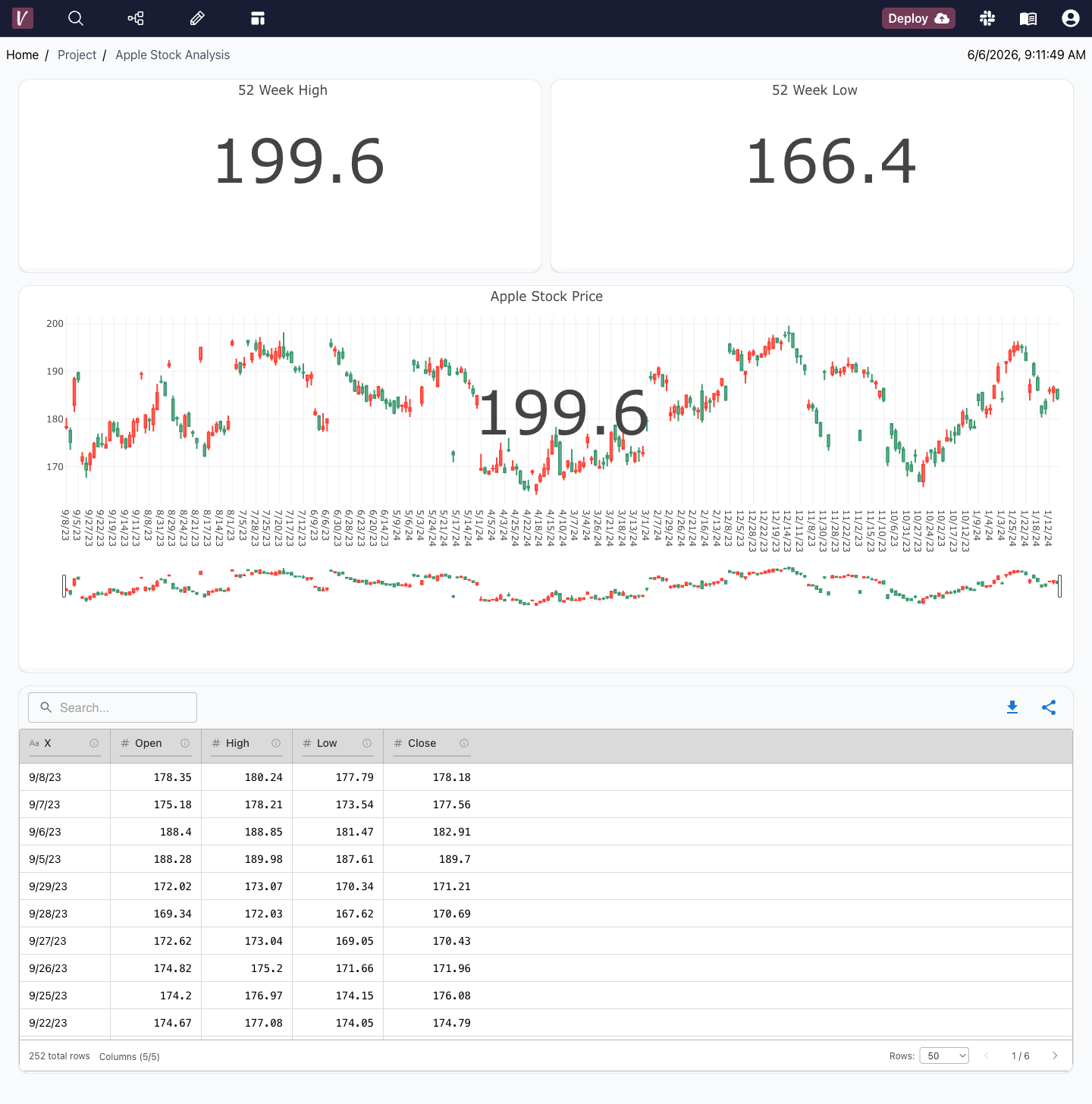
Highly custom UI with easy defaults

Detailed Differentiators

Each platform's unique strengths and limitations.

Lightdash

Directly leverages dbt's semantic layer: 'write metrics in dbt, Lightdash enables self-serve'. Open-source alternative to Looker.
Requires an existing dbt project and good documentation; not usable without dbt setup. Fewer visualization types than Tableau/PowerBI.

Looker (Google)

LookML semantic layer – centralized metrics definitions ensure a 'single source of truth'. Strong governance (row-level security, permissions) and embedded analytics support.
Requires upfront modeling (learning LookML); expensive. Visual customization and ad-hoc analysis flexibility less than Tableau/PowerBI.

Visivo

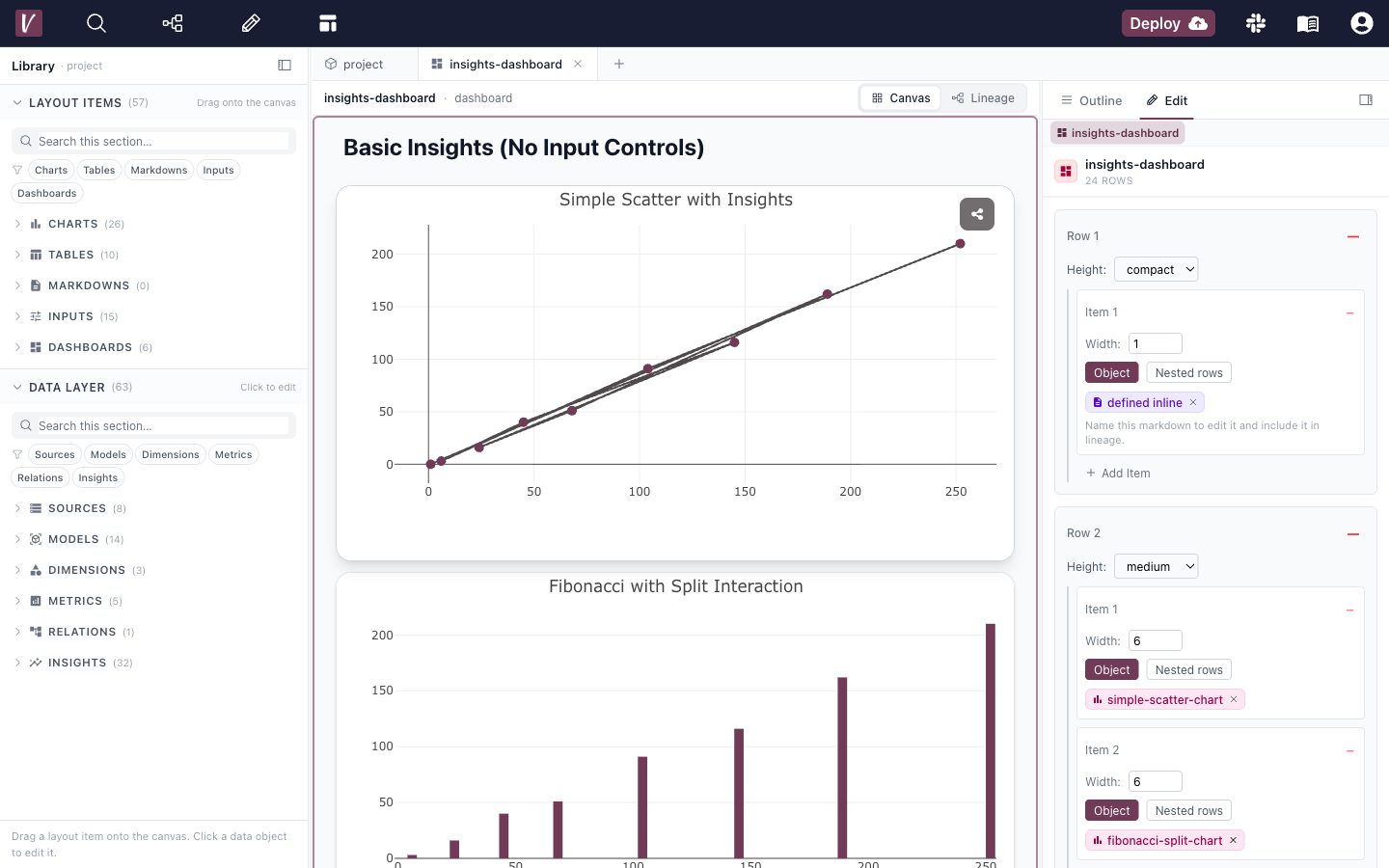
BI-as-code approach enables version control, collaboration, and CI/CD workflows. DAG-based architecture provides powerful data transformation capabilities and dependency management. Seamless visual-to-code workflow allows both technical and non-technical users to build dashboards effectively.
Requires understanding of data concepts; not a pure drag-and-drop tool like Tableau. Initial setup requires technical knowledge for optimal configuration.

Security & Architecture

Critical considerations for enterprise deployments.

Lightdash

DB Access: Yes, connects directly to DB (runs SQL on warehouse). Virtualization: Relies on live queries (no internal storage). Push: Data is pulled via queries on demand or scheduled caching. Security: Uses dbt/warehouse for access control; supports role-based access in app; inherits dbt's data perms.

Looker (Google)

DB Access: Yes (direct read queries to DB with cached results). Virtualization: No internal engine – relies on source DB ('in-database' analytics). Push: No, pull-based queries (though persistent derived tables can be pushed into DB). Other: Fine-grained RBAC; row-level security; SSO/SAML support.

Visivo

No db access required. Very strong security features due to the DAG-based access controls and the push based deployment model.

Why Visivo Stands Out

While each platform has its strengths, Visivo offers unique advantages for modern data teams.

DAG-Based Architecture for complex data transformations
Visual to Human-readable Code conversion
Multiple development approaches for all skill levels
AI-Powered dashboard creation
Full Git integration and version control
Open-source with enterprise features

Ready to Experience Modern BI?

Try Visivo today and see how it transforms your data analytics workflow.

$ curl -fsSL https://visivo.sh | bash
undefined
Jared Jesionek (co-founder)
agent avatar
How can I help? This connects to our slack so I'll respond real quickly 😄
Powered by Chatlio