Exploring Streamlit, Deepnote & Visivo

Streamlit vs. Deepnote vs. Visivo

Compare key features, capabilities, and differentiators between Streamlit, Deepnote, Visivo. This comprehensive analysis will help you make an informed decision for your data visualization needs.

Quick Comparison

Key features and capabilities at a glance

FeatureStreamlitDeepnoteVisivo
Deployment ModelOpen-source (Python library), Self-hosted server, Streamlit Cloud, Snowflake-managed enterpriseCloud (browser-based), Enterprise deployment, Private cloudOpen-source, Cloud Service, Self-hosted
PricingOpen-source (Apache 2.0); Free community hosting (limited), Snowflake-managed enterprise hostingFree tier (limited projects); paid for premium features. Closed-source.Open source (GPL-3.0)
Cost$$$$$
Git Integration
CI/CD & Testing
Real-time
AI Features
Visual to Code
DAG-Based

Target Users & Use-Cases

Each BI tool is designed with specific user personas in mind.

Streamlit

Data scientistsPython developersML engineers

Deepnote

Data science teamsEducatorsAnalysts collaborating on notebooks

Visivo

Analytics EngineersData teamsBusiness usersEngineers

Ease of Development & Deployment

Development experience directly impacts team productivity and time-to-value.

Streamlit

5/5

Deepnote

4/5

Visivo

5/5

Key Integrations & Ecosystem

A robust ecosystem of integrations is essential for modern BI tools.

Streamlit

Python data science librariesSQL databasesSnowflake native integration

Deepnote

SQL databases (PostgreSQL, BigQuery, etc.)Cloud storage (Google Drive, S3)dbt workflow integration

Visivo

dbt coreAll major databasesCustom connector frameworkSlack for alertsGithub

Visualization Capabilities

The ability to create compelling visualizations is key to data storytelling.

Streamlit

Not a traditional BI dashboard tool – rather, a Python app framework. You write Python to output charts, tables, and UI widgets. Highly flexible (use any Python viz library like Altair, Plotly, etc.), but all customization is via code.

Deepnote

Jupyter-like notebooks with collaborative editing. Supports interactive visualizations by writing code (Python, R, SQL blocks). Has a GUI for basic charts: you can switch a SQL cell's results into a chart view (bar/line) quickly. Can arrange outputs into a dashboard layout for sharing. Custom viz requires coding (e.g., Plotly, seaborn).

Visivo

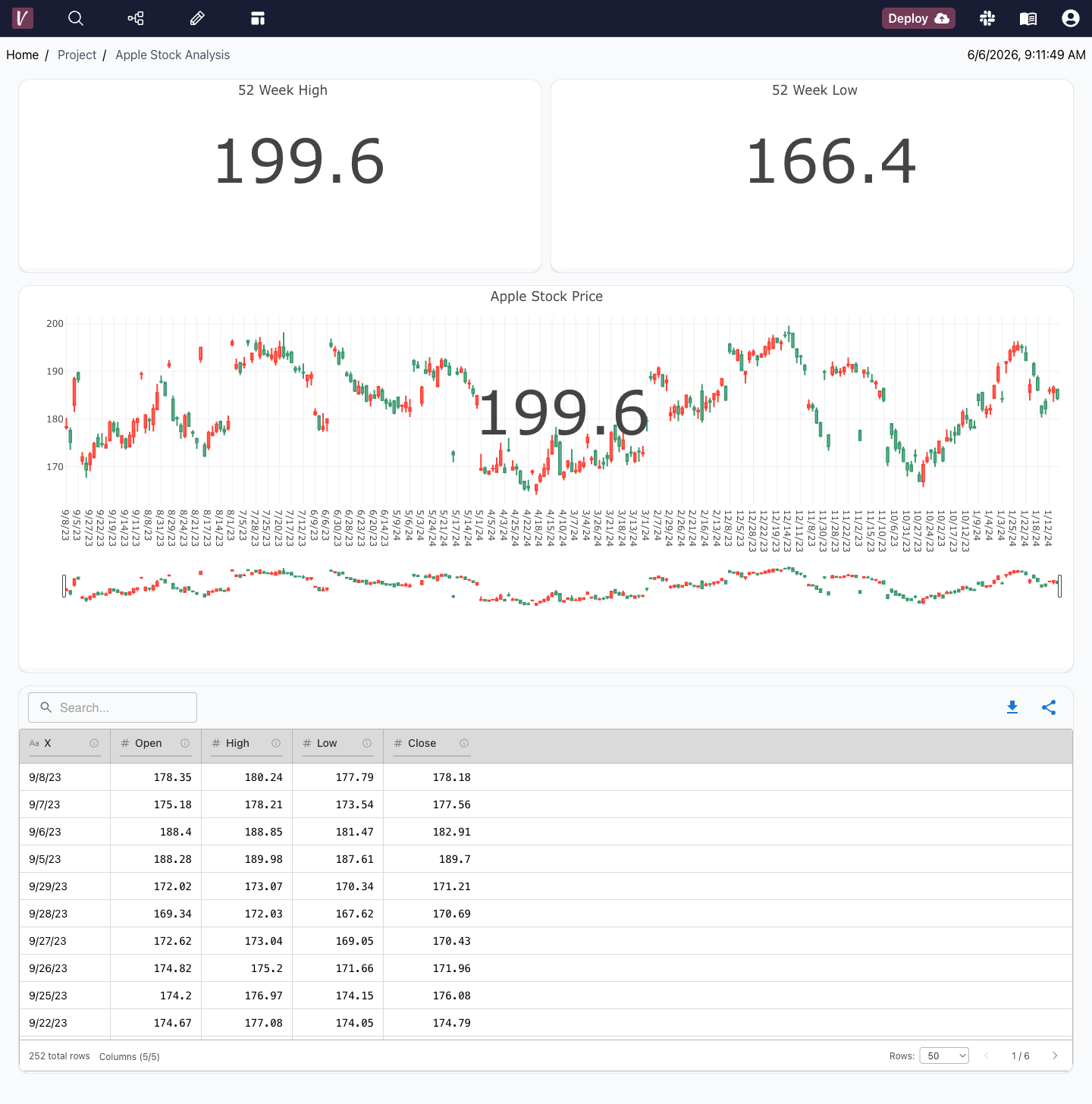
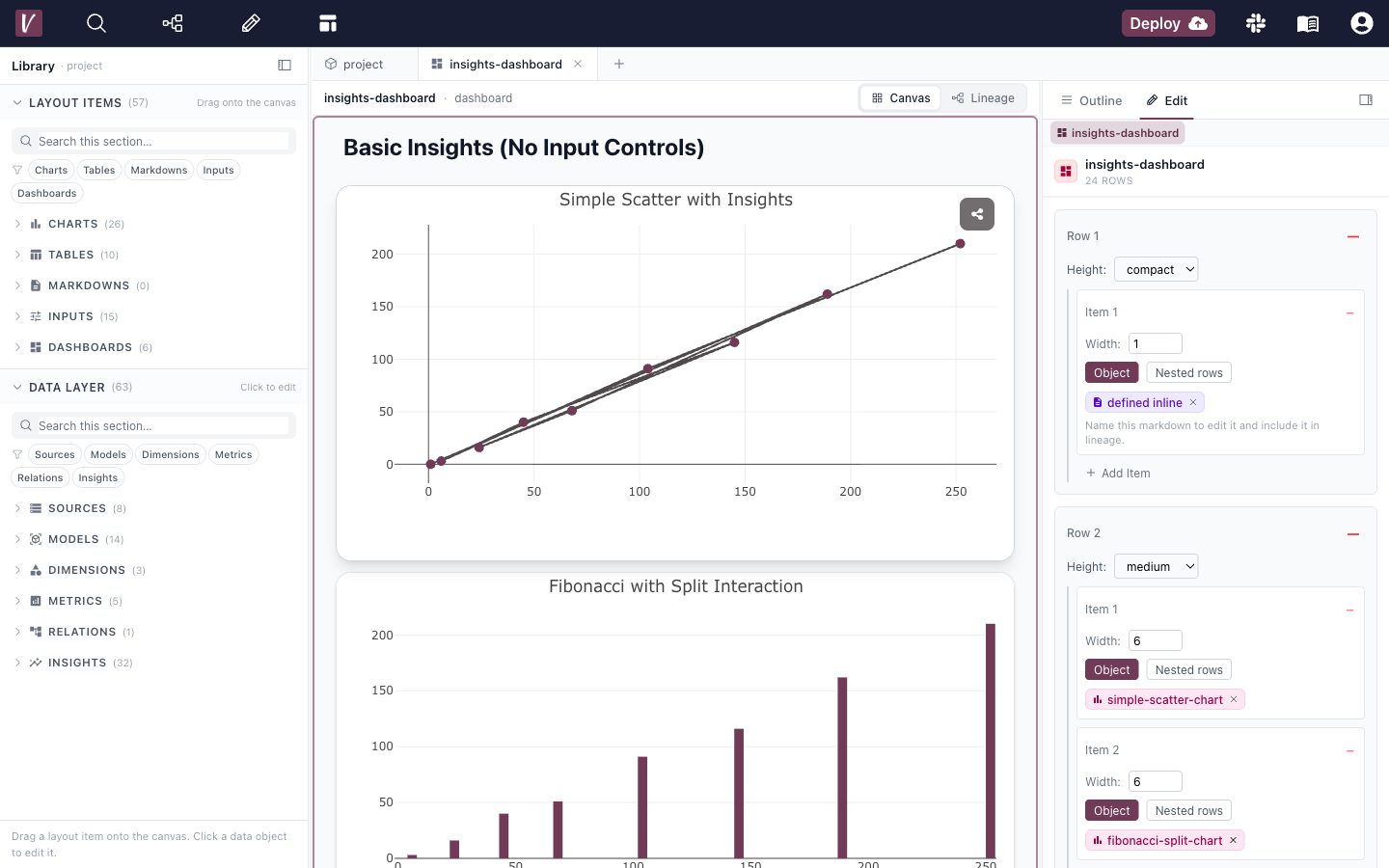
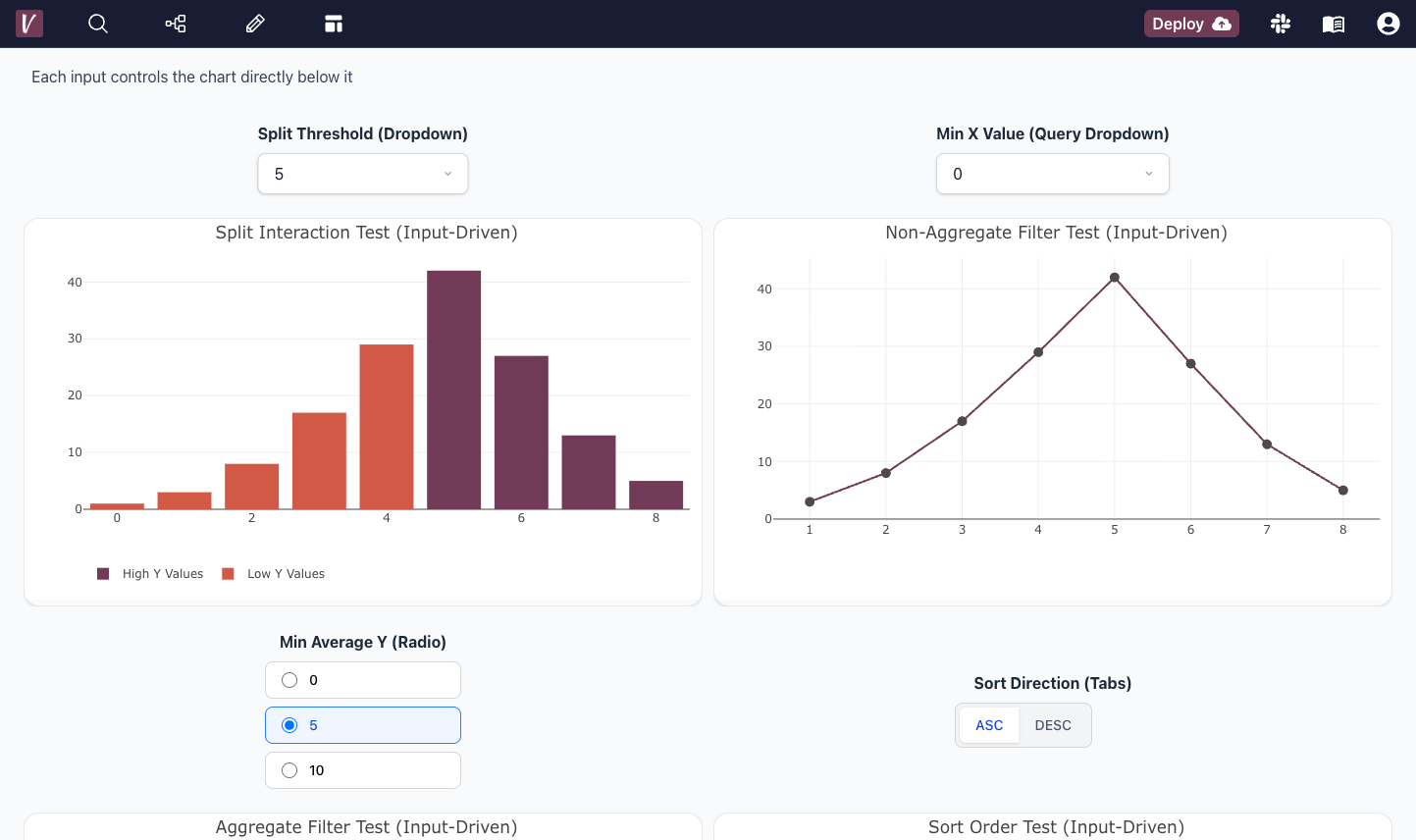
Highly custom UI with easy defaults

Detailed Differentiators

Each platform's unique strengths and limitations.

Streamlit

Super easy and fast to turn a Python script into a shareable web app. Perfect for quickly prototyping data apps and internal tools.
Not aimed at non-coders – lack of GUI means business users won't build in it. No built-in multi-user management or security layers (rely on external auth if needed).

Deepnote

Real-time collaboration on notebooks (like Google Docs for Jupyter) – multiple users can work simultaneously. Great for mixed code-and-text narratives and then turning into lightweight dashboards for stakeholders.
Still requires coding for most analysis; not a drop-in replacement for tools like Tableau for a pure business user.

Visivo

BI-as-code approach enables version control, collaboration, and CI/CD workflows. DAG-based architecture provides powerful data transformation capabilities and dependency management. Seamless visual-to-code workflow allows both technical and non-technical users to build dashboards effectively.
Requires understanding of data concepts; not a pure drag-and-drop tool like Tableau. Initial setup requires technical knowledge for optimal configuration.

Security & Architecture

Critical considerations for enterprise deployments.

Streamlit

DB Access: Yes, if app connects to a DB, it uses direct credentials (no abstraction). Virtualization: No, Streamlit just runs code – any virtualization must be coded. Push: No – app pulls data or receives via API. Other: Security depends on deployment (can use authentication proxies or Snowflake's SSO when integrated). No built-in row-level security – must code filters per user if needed.

Deepnote

DB Access: Yes, uses direct credentials to query databases in SQL cells. Virtualization: No separate layer – it's a client executing queries or code. Push: No (though you could push data via Python in a notebook to an external system). Other: Deepnote runs in cloud with project-specific isolation; offers Google SSO. Not designed for role-based consumption – notebooks can be shared via link with view/edit rights.

Visivo

No db access required. Very strong security features due to the DAG-based access controls and the push based deployment model.

Why Visivo Stands Out

While each platform has its strengths, Visivo offers unique advantages for modern data teams.

DAG-Based Architecture for complex data transformations
Visual to Human-readable Code conversion
Multiple development approaches for all skill levels
AI-Powered dashboard creation
Full Git integration and version control
Open-source with enterprise features

Ready to Experience Modern BI?

Try Visivo today and see how it transforms your data analytics workflow.

$ curl -fsSL https://visivo.sh | bash
undefined
Jared Jesionek (co-founder)
agent avatar
How can I help? This connects to our slack so I'll respond real quickly 😄
Powered by Chatlio